|
|
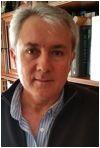
Pedro Merino Gómez Full Professor
|

Short bio:
Dr. Pedro Merino is professor at professor at University of Malaga. His research interests
are foundations, tools, and
applications of formal methods
for critical systems, particularly communications software, and development
techniques for Internet services on mobile
networks. Responsible of several national research projects on mobile phone
technologies and embedded systems, he is also the leader of several projects oriented to technology transfer
in the field of mobile communications with international companies like OPTIMI-Ericsson (tools for quality
of service on mobile phone), AT4 wireless (development of communication software for signalling protocols of new standards HSPA and LTE) or Keysight Technologies (techniques
to optimise radio resources
in mobile communications).
He was involved in the TECRAIL project, devoted to defining the use of LTE as the future replacement of GSM-R for railway control. This project was
coordinated by Alcatel-Lucent with the
main Spanish stakeholders ADIF and Metro Madrid. He was
member of the steering committee of COFUND project ABCDE (FP7) and he is the technical coordinator
of project SAID (FP7) devoted
to the demonstration of
novel ICT technologies to implement
decision support systems for water
management. Pedro Merino has co-authored
papers in relevant journals in this field of mobile communications (such as IEEE Pervasive Computing, Mobile Networks & Applications, and Computer Communications) and methods for software development (such as IEEE Software, Science of
Computer Programming,
Software Tools for Technology
Transfer, Journal of Automated
Reasoning). Pedro Merino was
the chair of the ERCIM WG on Formal Methods for Industrial Critical Systems, and member of the Executive
Committee of ERCIM, one of the larger research
consortiums in ICT. He represents
University of Malaga in Networld2020 ETP and the
5GPPP Association. His is member of GISUM and MORSE
research groups
Some current activities:
EC H2020 5G Infrastructure PPP
International SPIN
Symposium on Model Checking of Software – 2018 (Málaga)
Networld 2020 European Technology Platform
EC H2020-ICT TRIANGLE project
EC H2020-ICT Q4HEALTH project
EC H2020-ICT Fed4FIREplus project
ERCIM Working Group on Formal
Methods for Industrial Critical Systems
Selected publications (links to more papers at dblp and research gate)
1.
Ana
Rosario Espada, María del
Mar Gallardo, Alberto Salmerón, and Pedro Merino,
“Performance Analysis of Spotify® for Android with Model-Based Testing,” Mobile
Information Systems, vol. 2017, Article ID 2012696, 14 pages, 2017.
doi:10.1155/2017/2012696 [JCR (2015) Computer Science, Information Systems 53/144:
1,462, Q2]
2.
Álvaro
M. Recio Pérez, Almudena Díaz Zayas, and Pedro Merino,
“Characterizing Radio and Networking Power Consumption in LTE Networks,” Mobile
Information Systems, vol. 2016, Article ID 2752961, 10 pages, 2016.
doi:10.1155/2016/2752961 [JCR (2015) Computer Science, Information Systems 53/144:
1,462, Q2]
3.
Alberto
Salmerón, Pedro Merino: Integrating model checking
and simulation for protocol optimization. Simulation 91(1): 3-25 (2015) [JCR
(2015) Computer Science, Software Engineering 77/106: 0,64, Q3]
4.
F.
Javier Rivas Tocado, Almudena
Diaz-Zayas, Pedro Merino: Characterizing Traffic
Performance in Cellular Networks. IEEE Internet Computing 18(1): 12-19 (2014)
[JCR (2014)
Computer Science, Software Engineering 16/104: 1.713, Q1]
5.
Jesús Martínez, Pedro Merino, Alberto Salmerón, Francisco Malpartida.
UML-Based Model-Driven Development for HSDPA Design. In IEEE Software, vol. 26,
no. 3, 26-33, 2009. ISSN: 0740-7459. [JCR (2009) Computer Science, Software Engineering 14/93:
2,039, Q1]
6.
Almudena Díaz, Pedro Merino, F.Javier Rivas. Mobile Application
Profiling for Connected Smartphones.In IEEE Pervasive
Computing, Vol. 9, no. 1, January-March 2010 [JCR (2008) Telecommunications 7/67: 2.615, Q1]
7.
Almudena Diaz, César .A. Garcia.
Pedro Merino: Third-Generation Partnership Project Standards: For Delivery of
Critical Communications for Railways. IEEE Vehicular Technology Magazine, 9 (2)
– Jun 1, 2014. JCR (2014) Telecommunications 19/71: 1.750, Q1]
8.
Damián Adalid, Alberto Salmeron,
María-del-Mar Gallardo, Pedro Merino: Using SPIN for
automated debugging of infinite executions of Java programs. Journal of Systems
and Software 90: 61-75 (2014) [JCR (2014) Computer Science,
Software Engineering 33/104: 1.352, Q2]
9.
Almudena Díaz, Pedro Merino, F.
Javier Rivas. QoS Analysis of Video Streaming Service
in Live Cellular Networks. In Computer Communications Elsevier, Vol. 33, Issue
3, 26 February 2010 [JCR
(2010) Telecommunications 39/80:
0.816, Q2]
10. P. de la Cámara,
J. R. Castro, M. M. Gallardo, P. Merino Verification support for
ARINC-653-based avionics software. Software Testing, Verification and
Reliability. 21(4): 267-298 (2011) [JCR (2011) Computer Science, Software Engineering 26/93:
1,632, Q2]
Selected projects:
1.
TRIANGLE. 5G applications
and devices benchmarking, EC H2020-ICT. Grant Agreement 688712, 36 months,
2016-2018, Coordinator Keysight Belgium, 560.000 M€
2.
Q4HEALTH. Quality of
service and prioritization for emergency services in the LTE RAN stack, EC
H2020-ICT. Grant Agreement 688624, 24 months, 2016-2017, Coordinator RedZinc Irland, 211.000€
3.
Federation for FIRE+
(Fed4FiIRE+), EC H2020- ICT, Grant Agreement Number 732638, 60 months,
2013-2016, Coordinator iMEC Bélgium,
127.000 M€
4.
FIRE LTE testbeds for open experimentation (FLEX), EC FP7-ICT, Grant
Agreement 612050, 36 months, 2014-206, UTH Greece, 193.000 €
5.
Federation for FIRE
(Fed4FiIRE), EC EU FP7- ICT, Grant Agreement Number 318389, 36 months,
2013-2016, Coordinator iMinds Belgium, 50.000 €
6.
Smart Water Management With Integrated DSS (SAID), EC FP7
ENV-2013-WATER-INNO-DEMO-1, Grant Agreement Number 619132, 36 months,
2014-2016, Coordinator Abeinsa BD Spain, 203.000 M€
7.
TECRAIL, LTE for automatic
driving and railway signalling, IPT-2011-1034-370000, Spanish
Government-INNPACTO, 36
months, 2011-2014,
Coordinator Alcatel Lucent, 472.676
€
8.
SIGO, Innovative solutions
for pre-5G communications, Keysight Technologies, 30
months, 2015-2017, 260.000 €
9.
4Green, Wireless Devices
Global Testing and Certification Management System, At4 wireless and Keysight Technologies), 36 months, 2012- 2014, 357.000 €
10.
WiTLE2, Development of
Technologies and Tools to facilitate the deployment of the new 4G
communications networks, AT4 wireless, 48 months, 2009-2012, 1.083.677 €
11.
Development of a Decision
Support System for Dam management, BEFESA, -ABENGOA Water- CENIT TECOAGUA, 36
months, 2009-2012, 280.000 €
12.
Research in methodologies
for reliable software in communication systems beyond 3G, Cetecom,
24 months, 2006-2008, 290.000 €
Editorial role:
1.
Pedro Merino, Maria G. Martini, Raimund Schatz, Lea Skorin-Kapov, Martín Varela:
Improving QoS and QoE for
Mobile Communications. Journal Comp. Netw. and Communic. 2013: 645174:1-645174:2
(2013)
2.
Darren D. Cofer, Alessandro Fantechi, Stefan Leue, Pedro Merino:
Preface to the special issue on Formal Methods for Industrial Critical Systems
(FMICS 2007 + FMICS 2008). Sci. Comput.
Program. 76(2): 63-64 (2011)
3.
Stefan Leue, Pedro Merino: Formal Methods for Industrial Critical Systems, 12th
International Workshop, FMICS 2007, Berlin, Germany, July 1-2, 2007, Revised
Selected Papers. Lecture Notes in Computer
Science 4916, Springer 2008, ISBN 978-3-540-79706-7 [contents]
4.
Pedro Merino, Erwin Schoitsch: Introduction to the
Special Theme "Safety-Critical Software". ERCIM News 2008(75) (2008)
Conferences (organization / programme comitties):
1.
FMICS (Int.l Workshop on
Formal Methods for Industrial Critical Systems), 2007, co-chair Stefan Leue
2.
SPIN (Int. Symposium on Model Checking of Software
2018), co-chair María del Mar Gallardo (in progress)
3.
JICT (International Conference on Science and
Technology), 2007. Co-chair.
4.
Formal Methods for Industrial Critical Systems
workshops, Member of the board of since 2005
5.
SPIN (International Symposium on Model Checking of
Software), Member of the scientific committee, 2004, 2007, 2015, 2016
6.
PIMRC (IEEE International Symposium on Personal,
Indoor and Mobile Radio Communications), Member of the scientific committee,
2008, 2009, 2010, 2011, 2013, 2016
7.
SAM (Systems Analysis and Modeling),
Member of the scientific committee, 2010, 2012, 2014
8.
CITA (Ibero-american
Congress on Telematics), Member of the scientific committee, 2001
9.
WCNC (IEEE Wireless Communications and Networking
Conference), Member of the scientific committee , 2009
10. CONQUEST
(International Conference on Quality Engineering in Software Technology),
Member of the scientific committee ,2007, 2008, 2009.
11. SEFM
(IEEE International Conferences on Software Engineering and Formal Methods),
2008
12. ICUMT
(International Congress on Ultra Modern Telecommunications and Control
Systems), Member of the scientific committee, 2010, 2011, 2012, 2013, 2014,
2016
13. NEW2AN
(Next Generation Wired/Wireless Advanced Networking), Member of the scientific
committee, 2010, 2011, 2012, 2013, 2014, 2016
14. rusMART, Member of the scientific committee, 2010, 2011,
2012, 2013
15. FMICS
(International Workshop on Formal Methods for Industrial Critical Systems),
Member of the scientific committee, 2001, 2002, 2003, 2007, 2008, 2009, 2010,
2013, 2014,. Co-chair en 2007
16. MSVVEIS
(International Workshop on on Modelling, Simulation,Verification
and Validation of Enterprise Information Systems ), Member of the scientific
committee, 2007,2008,2009,2010, 2011
17. SDL
Forum (Model Driven Dependability Engineering), Member of the scientific
committee, 2007, 2009, 2011, 2013, 2015
18. EUROPAR,
Member of the scientific committee, 2008.
19. ISSRE04:WITUL (Workshop on Integrated-reliability with
Telecommunications and UML Languages), Member of the scientific committee, 2004.
20. WoRIE (Workshop on Reliable Intelligent Environments),
Member of the scientific committee 2013, 2014, 2015, 2016